
Palmy
Cats always know their position in space.

ON DECEMBER 30, 2019, MIKE THOMSON REPORTED ON BBC RADIO 4 that cats outnumbered people in the town of Kafi Nabi, situated in Syria’s last rebel-held province. Forty thousand people had once lived in the town. By the end of 2019, fewer than 100 people remained as bombs shredded the area. People were feeding the cats that were crying from the noise. Each remaining resident was caring for between 12 and 15 animals. Said Salah Jaar, a 32-year-old news reporter for a local radio station, told Thomson, “Whenever I eat, they eat, whether its vegetables, noodles or just dried bread. In this situation, I feel that we are both weak creatures and need to help each other.”
I can’t think of a better approach to life than this one, as we are swept up in the spasms of history. I don’t watch movies and steaming shows about war. Movies about war are always about the wars to come. Pleasure when it stirs feels out of sync with reported news, because it is out of sync with reported news.
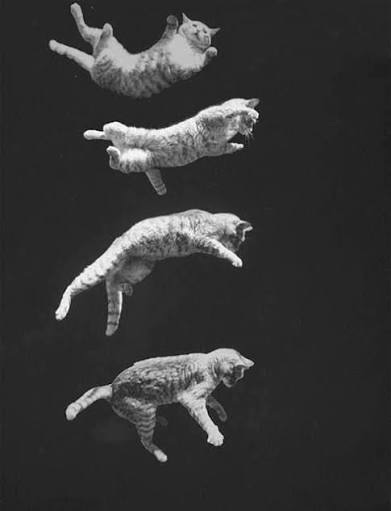
Yesterday, the sheep on the neighboring farm were sitting on the ground. Richard thought they knew it was going to rain and were saving a dry spot, like birds on nests. The sun came out in the afternoon, and it was blinding. I’m watching squirrels dart across fields and race up trees. I’m watching the day lilies bloom. I read the poems of a friend. I bought a small Turkish kilim from a woman who looked like a young horse stepping high in new-mown grass. Cats always know their position in space. Their inner-ears contain an internal gyroscope. They have the most flexible spines of all mammals and can right their heads and twist their bodies while falling.
One night in New York, I met a woman at a party who had worked for ten years as a go-go dancer. Her hair was dark and shaped around her face like a cloche hat. She sat with her back very straight, wearing a leather dress that zipped down the front from her throat to the hem. She had been living in Los Angeles. On average she’d earned between $300 and $500 a night, all in cash. She’d moved to the States from Poland and at that time was undocumented, so she’s been unable to open a bank account and had paid for everything in cash, including her tuition to college and later law school.
She said she’d liked dancing. She’d liked the attention. She’d liked using her body in this way, separately articulating legs, arms, head, and torso, and working up a sweat. She said, “I didn’t have to go to a gym. I could eat whatever I wanted.” She would dance for half an hour then take a half-hour break, working for nine hours during a shift. Each dancer had the stage to herself for her set.
During the time she was dancing, she met a man who was married. He threw over his life to be with her and in time bought the go-go bar where she worked. Every so often, police would raid the premises, and the man would arrange to have the charges dropped. The woman was composed and mysterious, casting a calming spell with her soft Polish vowels, and I tried to imagine her onstage, enjoying the dance. She was telling me everyone has a secret life.
Two months after Richard left Yaddo, he took a lease on a house on Miller and MacDowell, in one of those condominium complexes near a series of strip malls. There was a communal pool we swam in and communal hedges of oleander we walked past. On my third visit to Arizona, we were on our way back from the communal trash dumpster when I spotted a black plastic pail in front of a hedge. It looked like a dead stick, and I said to Richard, “Let’s take it home,” and he said, “I knew you would say that when you saw it.”
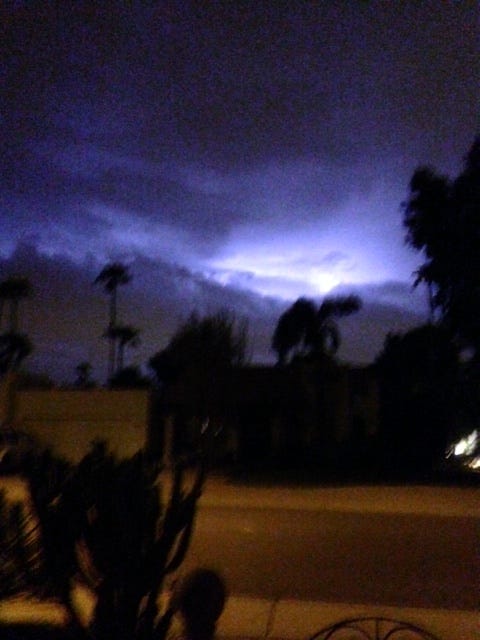
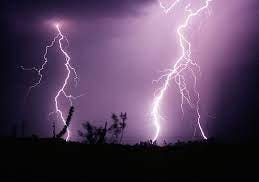
The house had what is called an Arizona room, which was a small front patio, where there was a hose. I scraped the stick’s brown husk, uncovering a bit of green. I began to water it, and in time it sent up a shoot that unfurled into a palm frond. I recognized the species from a nearby park where we walked and where the palm’s relatives grew wild along the edges of a manmade lake. The park was not really a park but part of the system of washes that collect water during the short periods of massive desert downpours. These were thrilling. The sky would turn a pink the color of desert rock and lightening would crack open the sky. You could feel the thunder move through you the way the lightening would rush down into the ground.
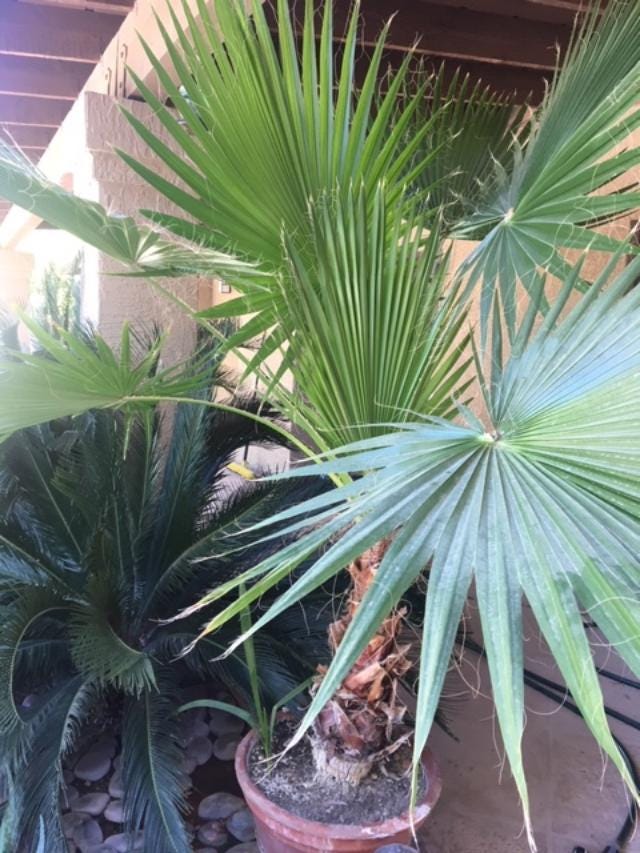
We repotted the plant into a proper terra cotta pot and named it Palmy, and for fourteen years it moved where we moved, growing into a tree over eight feet tall. In 2019, I didn’t know what would happen to Palmy when we left Arizona for good. The plant had come into our lives at the start of our relationship. It was part of us or it symbolized us in the accidental way we’d met and the way, in time, we’d peeled back the layers of each other. How were we alike? How were we different? One way we were alike is we had both left home at seventeen and never again lived with our parents, not out of anger. We were just ready to go. Another way we were alike was that, as children, we’d lived largely unsupervised by adults. Your parents would let you out the door like a dog. You’d run around where you liked and return home for meals.
The woman who owned the house we had rented for ten years was not a friend to Palmy’s species or perhaps to any palms. The fate of Palmy weighed on me. I think it weighed on Richard, too, although you can’t be certain of a thing like that in his case. The English restraint. The interestingly cold-blooded way he can enter a chapter of life and leave it.
One day, close to the date we would leave, I asked our neighbor Samantha if she would adopt Palmy, and she said yes. Palmy could come live at her house, and all the worry of the move fell away. This is the neighbor I would call from New York when I couldn’t get Richard on the phone and knew he must be having a low blood sugar. Samantha lived alone with two small white dogs. She had worked as a nurse. I would alert her something could be wrong. She would find the secret key we left outside, and she would find Richard, who was either naked or wearing underpants in bed, and she would bring him orange juice. I would hear her on the other end of the phone saying, “Come on, Richard, have some juice,” as she held his head and held a glass to his lips, and I would stay with them until Richard was back to himself, thanking Samantha, and we would feel the good fortune of a neighbor like Sam. I feel it now.
________________________________________
The next Zoom Conversation on writing craft is on the music in a piece of writing. How to find it, and how to play it. THIS SATURDAY JUNE 27 from 3 to 4 EST. To RSVP, please email: lauriestone@substack.com
Everyone is welcome to ask questions about their own writing practice.

Every writing technique I think about can be taught and practiced. That’s my theory of writing. Nothing magical. No muse, no waiting for inspiration, no trophy of perspiration. No romanticized notion of talent, really. To me, these ideas sound like predestination. You either got it or you don’t got it. In my mind, you can get it, and I am happy to share everything I know—at least what I think about writing a sentence, writing a paragraph, writing dialogue, creating a narrative voice, a narrative persona, and all the rest. How do you produce suspense, tension, and amplification, working with language in a way similar to musical composition? How do you learn to hear your music and work it into your pieces?
____________________________________
Support
The stack needs you. It’s funded entirely by paid subscribers—no angels or grants—and for it to continue and develop, new subscribers need to take a turn. If you have been enjoying the writing for a while, I hope today is the day you will jump in. It’s super easy and this Substack is among the least expensive ones to join.
I know money is tight for many people, and if you want to subscribe and need a further discount, just email me, and I will work out an arrangement with you. Please don’t be shy. The number of paid subscribers is part of what determines a publication’s success on the platform. Just write to: lauriestone@substack.com
You get invited to 12 Zoom conversations on writing craft for free. You get past recordings for free. You get to read the entire archive of 317 literary pieces for free any time. You get a free 15-minute phone conversation with me about your writing practice if you are considering working with me one-on-one.
For everyone who is already a paid subscriber, I send love. In other news, Richard Toon is recovering well from his two cataract surgeries. I was a bit concerned, with his acute vision now, he would know what I actually look like. He said he could always see me.
NOTE!! To start a paid subscription on your phone, you need to switch out of the Substack app and use a browser such as Safari or use your computer.
______________________________________
Happenings for paid subscribers:
UPCOMING ZOOMS, always on Saturdays from 3 to 4 EST To RSVP: lauriestone@substack.com
LAURIE & RICHARD, on the difference between MEMORY and STORY and finding the music inside you and in a piece of writing: June 27, from 3 to 4 EST To RSVP: lauriestone@substack.com.
To attend one event or receive one recording, with no future payment obligation, you can buy a “coffee” for $4 at ko-fi.com/lauriestone
Breakout sessions following the Zooms with guest artists
The BREAKOUT SESSION following the Zoom conversation about MEMORY and STORY is on SUNDAY, June 28, from 3 to 4:15 EST. THERE ARE STILL PLACES. There is a cap of 10 at each breakout. You are invited to share a piece of your own writing of around 400 words. The SLAM readings are thrilling impovs—we make a work together larger than the parts! The fee is $30. To sign up please email me at: lauriestone@substack.com.
To request recordings of past Zoom Conversations
with Steven Dunn, with Margo Jefferson and Elizabeth Kendall, with Francine Prose, with Sophie Haigney (of The Paris Review), with David Cale that includes a reading from his hit solo theater piece Blue Cowboy, with poet David Daniel, with Daisy Alioto, publisher of Dirt , Michael Klein, and Marga Gomez, please email me at: lauriestone@substack.com.
Working together one to one on your writing or starting and growing a Substack publication.
If you would like to book time to talk one-on-one about a project you are working on or for guidance in gaining confidence and freedom in your writing practice, please email me at: lauriestone@substack.com.
If you would like to book time to talk one-on-one about STARTING AND GROWING a Substack publication, please email me at: lauriestone@substack.com. I can help you through the software, choosing a title, art design, and ways to gain readers.
__________________________________
Please “comment,” ”like,” and “share” below. Your engagement helps the algorithm notice the stack and gain a presence here for feminism and literary writing.
__________________________________
I THOUGHT RICHARD WOULD FORGET his life in Arizona after we left, and he has, just as I have forgotten my former lives that in retrospect are stray cats. In the future perfect verb tense, we imagine a future that has already passed—one of the great and beautiful gifts of grammar.
I actually reread parts of the essay to ask myself how we got from cats and Polish go-go dancers to plants and how we move through different eras but while reading it I just bobbed along happily. Jazz!
Today's post reminds me of a jazz piece. It has these passages that appear to be in a certain key. They melody feels it's being improvised inside your particular voice. You can hear the voice of "Laurie Stone," no matter the genre or length of a piece. I look forward to our conversation about music and writing this Saturday and hope my eyes and brain will be in a more synced conversation with each other than at the moment!