
Making book
and thought struck.

GOD, I LOVE WALKING IN A CITY. I remember times with a disappointment, all I could do was walk. It helped and it didn’t help. There’s no outwalking some feelings.
I love walking through Central Park with Richard, who has things to say about this idea on his mind or that book on his desk. Lately, he’s been reading Virginia Woolf’s literary essays, collected in the two Common Readers and other volumes. When we got to the Bethesda Fountain, with its soaring angel in the center, he told me about an essay Woolf had written about Charlotte Brontë and how Woolf thought Charlotte’s anger had deformed Jane Eyre. I know the essay well. I said I disagreed with Woolf. I thought Woolf had been scared of Charlotte’s anger, in terms of her own sick-to-deathness of the status of women in society, a sick-to-deathness she’d written about brilliantly in A Room of One’s Own.
I also understood what Woolf meant by the raw cri de coeur you get in Charlotte and how that voice wasn’t Woolf’s at all. Even in A Room of One’s Own, she had formed sentences to sound witty and arch, not shrill, not blamey toward men, not anything a male reader could get too huffy about.
In the essay Richard was speaking about, Woolf wonders what the sentences of women will to be like in years to come, whether women will invent different kinds of sentences from the sentences men write. By the sentences men write, Woolf meant the sentences of educated white men in European societies.
Richard said my sentences were a thing of their own, shaped over the years. I said I didn’t think my sentences were the sentences of a woman per se. They were the sentences of a Laurie, but who knows.
And yes, Virginia, it’s all up for grabs now, and the best thing women have going is we don’t have to write for the approval of men. That men will still have the urge to evaluate us is becoming less and less an issue, especially when, in electronica, you can tell them you’re not performing for their approval and then hit “delete.”
The longer you live, the more you slip out of past clothes and the less you may appear to have a body and a face at all. You aren’t smoke, quite. You have become something closer to a dog in the way others can’t tell what you’re thinking, and you’re not sure what language you’re using.
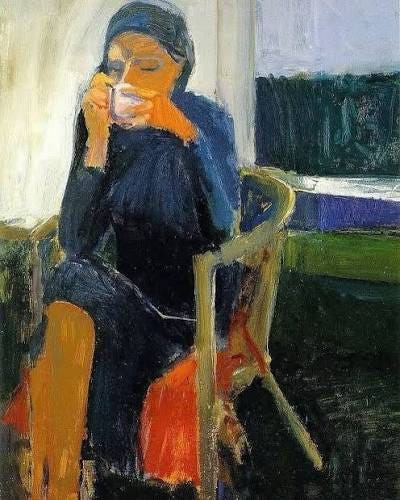
I recognize that, in the past, I was lonely and restless. I love that all endings are bad. I like gray clouds over churning water. I like the paintings of Richard Diebenkorn. I like the performance of Aaron Paul in Breaking Bad. One night at a party, I met a man who smiled like my grandmother, when she saw me running down the hall to her door.
Humans last swam in the same gene pool with the animals that evolved into fish about 460 million years ago, more than 100 million years before we split from birds. I love that hiccups are a relic of breathing through gills. I love that when you have your teeth cleaned, you feel you could bite things forever. The other day, I was rummaging in my closet, and I found a leather jacket from when I didn’t know why strangers talked to me on trains. In those days, the ring on my phone was the overture to The Magic Flute.
________________________________
Run
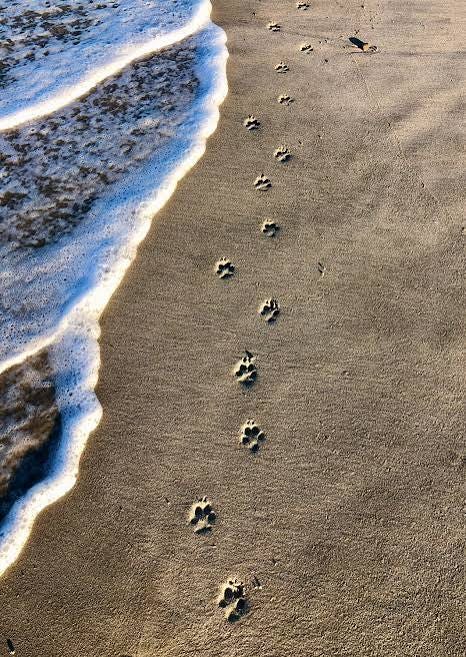
I AM A DOG, running into the water and coming back. When I run away, I don’t miss you. I may not even remember you. When I see the water, I am the water, alone and not alone. I’m the dog and the dog is the water, and the water is the dog. On the sand, I don’t look for you. On the sand, I run in the direction I came from. When I see you, I remember you or I just know you. I run up to you, and you are you and I am me, and it’s good until the next time I run in the direction of the water or the sky.
__________________________________
Ride or Die

I am really enjoying this girl buddy series, starring Octavia Spencer and Hannah Waddingham, created by girls and run by girls and focused on girls. I love Spy, starring Melissa McCarthy and Rose Byrne, and Ride or Die has a soupçon of that speedboat fun. There's a women-past-50 being kicked to the curb theme as well that feels real amid the extreme fantasy crazy of the setting. I mean, one of the women is an international hired assassin able to keep this a secret from her best friend for 25 years.
___________________________________
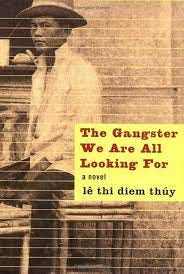
The Gangster We Are All Looking For (2003)
is a first book by lê thi diem thùy. I loved it. It’s practically all voice. The narrator isn’t named, and she reveals little directly about her feelings. She’s trained on her parents, father Ba, who brings her to southern California from Vietnam in the late 1970’s, and on her mother Ma, who joins the pair two years later in their unsettling life.
Partly, the novel is an immigrant’s tale of no longer there and where am I now. The characters are South Vietnamese “boat people,” who fled after the Communist victory. In the US, Ba is a house painter and later a gardener. Ma works as a seamstress and then a cook. At school, the narrator is the only Vietnamese child, and when her classmates stare, trying to grasp who she is and where she’s from, she imagines the stripes on her underwear “flashing on and off, like traffic signals.”
She’s a child. It’s hard for any child to tell the difference between the surreal quality of changing cultures and the equal weirdness of living in a body that’s changing. In a kid-constructed landscape of cardboard boxes, a boy feels up her breasts and she realizes, as if for the first time, that she “has” a body.
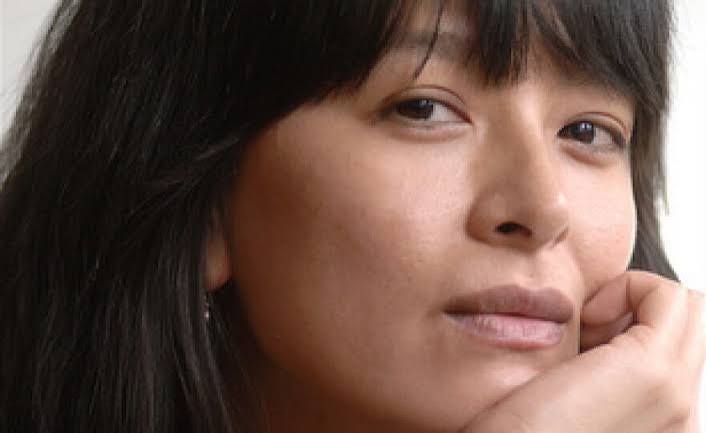
The narrator’s story is based on the author’s life and developed from several performance pieces she wrote and staged. She’s attempting to create a feeling life for experience there aren’t any words for yet. It’s why thùy falls in love with language. To her, words are controlled substances, stirring joy, escape, and a great economy of means.
The narrative skips back and forth in time and flies over space—such as the water separating California and Vietnam. When the family is living in a dreary apartment complex, the mean-spirited landlord, alarmed that neighborhood children are sneaking into the pool, has it filled with rocks and sealed over with cement. Ma wails to Ba, who feels powerless to intervene, “It’s ugly. What is there to look at now?” The narrator won’t recast the sorrow as something inevitable or tolerable, and it opens a window both to immigrant indignation and her mother’s relationship to beauty and romance.
Romance was what hooked her to Ba in the first place, we’re told in another section, when the narrator evokes Ba as a handsome rake and reputed black marketeer—the “gangster” of the title: “For a handful of pebbles and my father’s sharp profile, my mother left home and never truly returned. Picture a handful of pebbles. Imagine the casual way he tossed them at her as she was walking home from school with her girlfriends. . .. Ma says they touched her like warm kisses . . .on the curve of her back, sliding down the crook of her arm. . ..”
In Vietnam, Ba fought in the South Vietnamese army. After the war, he was sent to a re-education camp. In California, he spends long hours sitting alone in the dark. To wake him up, Ma smashes a car and shaves her head. The sex that had at first lit up their lives turns into an unappeasable disappointment.
Still, the narrator feels closer to Ba, the parent who carried her to America, combed her hair and dressed her. She writes: “I grew up studying my father so closely, as to suggest I was certain I saw my future in him. I would inherit his lithe figure and beautiful smile. I would build and break things with my hands. I would answer to names not my own and be ordered around like a child. I would disappear into every manner of darkness only to awaken amid a halo of faces encircling my body. Shame would crush me. . .. I would regard with suspicion the bare shoulders of a woman I desired.”
thùy doesn’t lop off parts of her story to present an upstanding anything. The South Vietnamese soldier, seen, regardless of his circumstances, as a partisan of the degraded Saigon regime, is also her Ba—a restless, flickering pain ball, who loses one of his children to drowning. His memories paint the cave wall of the narrator’s mind, connecting her to history and keeping him alive.
____________________________________
Where you come in.
If the writing here makes you feel things, please take a turn at supporting the stack. Honestly, it relies entirely on paid subscriptions. If you are a paid subscriber, the publication exists because of you. You can start for as little as $2.50 a month.
There are lots of benefits for paid subscribers including a free 15-minute conversation with me about your writing goals, free invitations to monthly Zoom conversations with guest artists, free access to the entire archive of 326 literary posts, and more.
_______________________________
Speaking of benefits . . .
Cassandra Neyenesch will be our Guest Artist on Saturday September 26 from 3 to 4 EST.
I met Cassy a bunch of years ago, and she started coming to my writing labs, where we’d gather in real time with other humans and write together to a prompt. Then we’d read the pieces to each other in a slam performance. These were one-time collaborative, spontaneous, improvised performances for us alone, and they were smashingly fun.
Cassy’s pieces were always: Wow, I love your voice, I love the weird jump cuts, I love the way your mind works. Sometimes, there’d be a piece about having to release pet birds she didn’t want to keep, or a story about her brother, her mother, her grandmother, or men her father’s age who watched her move in a way that taught her to think fast and move even faster.
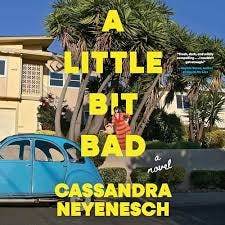
Cassy’s just-out first novel A Little Bit Bad is becoming a best seller. Richard and I are offering this event as a clinic, where you can ask Cassy questions about the process of producing a book of fiction and landing an agent and a book deal. What matters to her most about the experience so far and where is she heading next? To reserve a place at the Zoom, please email me at: lauriestone@substack.com.
__________________________________
The next Zoom conversation on writing craft is Saturday July 25 from 3 to 4 EST. To RSVP, please write to me at: lauriestone@substack.com
The focus will be on writing DRAMATIC NARRATIVE. What is it? How you can use it to write fiction, creative nonfiction, memoir, criticism, autofiction, travel writing, monologues, and just about any other genre people have named.
_____________________________________
Happenings for paid subscribers:
UPCOMING ZOOMS, always on Saturdays from 3 to 4 EST To RSVP: lauriestone@substack.com
LAURIE & RICHARD on writing DRAMATIC NARRATIVE in any prose genre: July 25, from 3 to 4 EST To RSVP: lauriestone@substack.com.
To attend one event or receive one recording, with no future payment obligation, you can buy a “coffee” for $4 at ko-fi.com/lauriestone
Breakout session/slam readings following the Zooms
The BREAKOUT SESSION following the Zoom conversation about DRAMATIC NARRATIVE is on SUNDAY JULY 26, from 3 to 4:15 EST. THERE ARE STILL PLACES. There is a cap of 10 at each breakout. You are invited to share a piece of your own writing of around 400 words. The SLAM readings are thrilling impovs—we make a work together larger than the parts! The fee is $30. To sign up please email me at: lauriestone@substack.com.
To request recordings of past Zoom Conversations
with Steven Dunn, with Margo Jefferson and Elizabeth Kendall, with Francine Prose, with Sophie Haigney (of The Paris Review), with David Cale that includes a reading from his hit solo theater piece Blue Cowboy, with poet David Daniel, with Daisy Alioto, publisher of Dirt, and others, please email me at: lauriestone@substack.com.
Working together one to one on your writing or starting and growing a Substack publication.
If you would like to book time to talk one-on-one about a project you are working on or for guidance in gaining confidence and freedom in your writing practice, please email me at: lauriestone@substack.com.
If you would like to book time to talk one-on-one about STARTING AND GROWING a Substack publication, please email me at: lauriestone@substack.com. I can help you through the software, choosing a title, art design, and ways to gain readers.
__________________________________
Please “comment,” ”like,” and “share” below. Your engagement helps the algorithm notice the stack and gain a presence here for feminism and literary writing. I LOVE YOUR COMMENTS!

Oh the dog. Oh the dog on the beach. Oh the dog at one with the beach.
Whenever I read your column I just sigh with a relief of recognition and belonging.