
Faces
lit with love.

YOUR FACES IN THE BOXES. I mean the people at Saturday’s Zoom conversation. I mean all of you reading this post. We are making something together, and we are feeling less alone. Four years ago, when I started the stack, the fun of what it could be was a conversation with Richard. The fun of everything is a conversation with Richard.
I used to have a partner at the gym I went to on West End Avenue. His name is Alan Bass, and there was something about his face that looked familiar. It turned out his brother lived on the same floor as me in my building, and there was a family resemblance. Alan would walk on the Stairmaster, sweating like crazy. He would be glistening, and he would be reading some academic journal or other in a brown paper wrapper, the way drunks would hide their bottles on the subway. I would take a Stairmaster next to him, and look over at what he was reading. We started to talk. Eventually, arguing about feminism this and Freud that, people would tell us to shut up. I’m not kidding. We would get so loud. The way we fought, Jew to Jew in the sawdust.
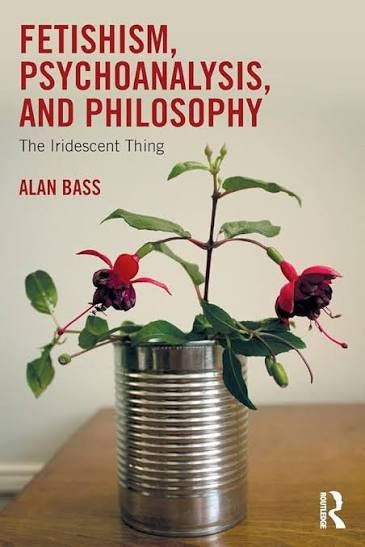
Why am I telling you about Alan? Because Alan became my partner at the gym, and having a partner at the gym turned out to mean everything to me, the way so many excitements become everything to me, in sequence or in a great pileup of things I love. Alan was a shrink, and he came to the gym between patients, and because I was a freelance writer and could do just about anything when I wanted to, I fit into his schedule in order to have someone to play with. At a certain point, we added yoga to our routines, practicing with the gym’s charismatic Eric, who was beloved for his sadism, the way many gurus are. Alan became great at yoga. I was just okay, amazed by the pretzel bodies of the yoga princesses Eric was a little less mean to than the rest of us clods.
I went to the gym to look good, of course. In order to get myself to the gym, I needed people. I needed what you could call community. I have no problem with the word, even though it’s an abstract noun, and I don’t like abstract nouns because they don’t mean anything. The word community doesn’t mean anything unless I show you what it tastes like and smells like and feels like—and includes you.
At Saturday’s Zoom, we decided to ask the people in the boxes to talk about the genres they were working in. It turned out to be a great array, which was exciting. Here I am writing the way I write, in a form without the kind of name you could put on the cover of a book and in a bookstore they would know where to place it on a shelf. It turned out, so are a lot of other writers playing with genres and mixing things up. The ostensible subject of the Zoom was applying the techniques of dramatic narrative (for example, this piece) to any prose genre, including—among the subjects that came up—coverage of an ICE detention center near where the writer lives, and a memoir about grief for a dead person the author questioned her right to feel. She felt she almost needed external permission to express the emotions moving through her.
As she spoke, it struck me this was the job of the Zoom, to give people permission to write about the things they loved—or about things hurting things they loved—without observing the shoulds and the should nots shouted at us by the zeitgeist. The motto of the Zooms might be: Write what you want to write without addressing your potential critics. Don’t translate yourself to be understood by people who basically want you to be like them. Don’t make a case for your values and responses to life. And don’t try to win love and acceptance from readers, because it will make you contort yourself. Together, we exhale and stretch. Together, we become a horse leaping over a fence.
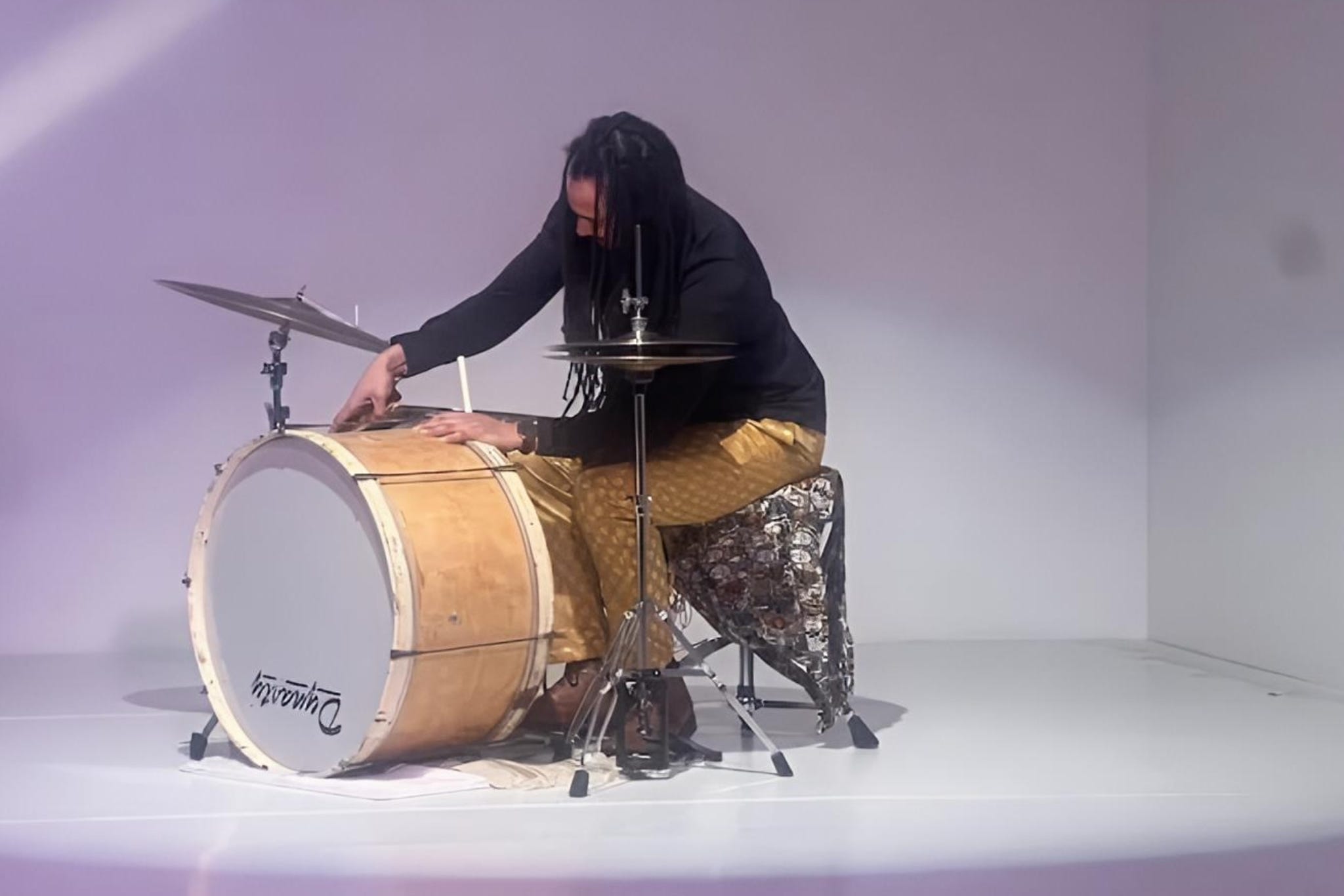
After the Zoom, Richard and I went to a concert in Chatham at PS21—the world premiere of composer Jessie Cox’s Listen to the Cry of the World performed by the International Contemporary Ensemble. It was music composed of sounds that mixed with the apple orchard we were in, where birds have first right of song. The experience reminded me a little of Eric’s yoga classes, where you have to give yourself over to sensations you haven’t experienced before. I love the space. I love live bodies together letting sound wash over them. The togetherness was different, technically, from the faces in the Zoom and also an extension of them, in the way we made a happening together.
When we arrived, the sun was low in the sky, and shards of light were cutting into the air. I heard my name called out with pleasure. It was Sarah, a friend I’d seen for coffee the other week. We both wrote for the Village Voice. We both wrote about theater and had different kinds of ties to Erika Munk, who was the theater editor for much of our time there. We are both feminists and Jews. We have the Jew, feminist, theater thing and gay politics. We have things in common.
Back during our days at the Voice, I was in the middle, age-wise, between Sarah and Erika. Sarah is ten years younger than me, and I am ten years younger than Erika. It could have been we were 30, 40, and 50 one time we were together at Erika’s cottage in the Hamptons. Now, the numbers are 70, 80, and 90, and it feels like we have become family.
You don’t always know the people who will turn out to be in your family or who will take you into theirs. It can be more or less musical chairs, with the last ones still in the game, and you find yourself so happy to see a familiar form and hear familiar voices, the sense of familiarity becomes the substance of love. It can’t be anyone, though. There are people, when I imagine them in the game of musical chairs, what if by some horrible accident I wound up in a game with them? I would not carry them along and would not want to be carried along by them, but who knows. I would have to see what happened to my heart in such a circumstance.
A little while ago, Richard and I were talking about times he had gone off from person X or job X and decided it had been enough. I said mainly I had been the one fired from a friendship or a job. Whether it’s true doesn’t matter. In this, the feeling sense of my life, I imagine I still love everyone I have ever loved, and this may be true. I love them at least a little. When you are the one who is fired, it was never the right time for you to feel, “that’s enough.”
Note: There is another piece following the announcement below.
__________________________________
Please come to our Zooms!
We would love to see your beautiful face in a box!
You don’t need to be a writer to attend. We also host Zooms with guest artists, who talk about their work and about sustaining a long life in art—that includes living in the political surround. We’ve hosted, among others, Steven Dunn, Margo Jefferson, Elizabeth Kendall, Francine Prose, David Cale, David Daniel, Perry Yung, Marga Gomez, Michael Klein, Errollyn Wallen, and many more.
If the writing here makes you feel alive, feel hope, feel like jumping over a fence!—PLEASE TAKE A TURN AT SUPPORTING THE STACK. Honestly, it relies entirely on paid subscriptions. If you are a paid subscriber, the publication and the other activities exist because of you.
You can start for as little as $2.50 a month.
There are lots of benefits for paid subscribers, including a free 15-minute conversation with me about your writing goals, free invitations to the monthly Zoom conversations, free access to the complete archive of 326 literary posts, and more.
It may be of interest to know that 423 other publications recommend Everything is Personal to their readers.
___________________________________
Dear fellow female humans,
You don’t have to like the writings of men. Most of it doesn’t like you. We’re instructed to take it seriously. It’s the ticket to a seat at the boys’ table. The boys’ table, we’re instructed, is the only table where anything good in life happens. The boys at the boys’ table will tell some of the girls, one at a time, she’s good enough to be taken for a boy. That’s what Bob Dylan said of Joni Mitchell. She was flattered. He said the other female humans who wrote songs should get off stage.
Pretty much the same thing Telemachus tells his mother Penelope at the start of The Odyssey. I was reminded of this a few minutes ago when I read a recent post by Rebecca Solnit: https://www.meditationsinanemergency.com/listening-to-cassandra-misogyny-classical-and-modern/ In it, she references a piece by the classicist Mary Beard called “The Public Voice of Women,” London Review of Books vol. 36 no 6-20 March 2014.
Beard’s essay opens, “I want to start very near the beginning of the tradition of Western literature, and its first recorded example of a man telling a woman to ‘shut up’; telling her that her voice was not to be heard in public.” Her example is the Odyssey and Penelope’s son Telemachus saying to her: ‘Mother, go back up into your quarters, and take up your own work, the loom and the distaff ... speech will be the business of men, all men, and of me most of all; for mine is the power in this household.’” And Penelope goes back upstairs.
Solnit is a great champion of stop telling women to shut up. She wrote a book called Men Explain Things to Me, a narrative that gave rise to the term mansplaining. Every time a man has commented on a post of mine with an argument, or a piece of instruction, or a long story about his interests and his life and this thing he wants to say to other men, in effect this man was telling me (and a zillion other women) to move over and shut up.
Penelope only goes back upstairs because she is a character invented by a male writer. She doesn’t have female friends. She has the god damn son and the god damn suiters. I mean, really. There is nothing here for us. Nothing. You think the boys will take you seriously if you take seriously what they think is serious? They will not. Not really. That’s what they are saying in all the books—most of them anyway—they have so far written. They don’t care if you read their books. They weren’t addressed to you.

_____________________________________
Happenings for paid subscribers:
UPCOMING ZOOMS, always on Saturdays from 3 to 4 EST To RSVP: lauriestone@substack.com
LAURIE & RICHARD on writing DRAMATIC NARRATIVE in any prose genre: August 29, from 3 to 4 EST To RSVP: lauriestone@substack.com.
To attend one event or receive one recording, with no future payment obligation, you can buy a “coffee” for $4 at ko-fi.com/lauriestone
Breakout session/slam readings following the Zooms
The BREAKOUT SESSION following the Zoom conversation about DRAMATIC NARRATIVE is on SUNDAY AUGUST 30, from 3 to 4:15 EST. There is a cap of 10 at each breakout. You are invited to share a piece of your own writing of around 400 words. The SLAM readings are thrilling impovs—we make a work together larger than the parts! The fee is $30. To sign up please email me at: lauriestone@substack.com.
To request recordings of past Zoom Conversations
with Steven Dunn, with Margo Jefferson and Elizabeth Kendall, with Francine Prose, with David Cale that includes a reading from his hit solo theater piece Blue Cowboy, with poet David Daniel, with Daisy Alioto, publisher of Dirt, and others, please email me at: lauriestone@substack.com.
Working together one to one on your writing or starting and growing a Substack publication.
If you would like to book time to talk one-on-one about a project you are working on or for guidance in gaining confidence and freedom in your writing practice, please email me at: lauriestone@substack.com.
If you would like to book time to talk one-on-one about STARTING AND GROWING a Substack publication, please email me at: lauriestone@substack.com. I can help you through the software, choosing a title, art design, and ways to gain readers.
__________________________________
Please “comment,” ”like,” and “share” below. Your engagement helps the algorithm notice the stack and gain a presence here for feminism and literary writing. I LOVE YOUR COMMENTS ABOUT THE POSTS!
__________________________________
Love followed by critique is the way to go, given how you mysteriously make the reader feel as positive as you are. I happen to know this from personal experience and look forward to years and years more.
Love how sharp your woman’s rights messaging is. Shocked that Roe falling is lost in the atrocity a day plan we have now. And nice positive blast how you feel about the zoom gang