
Claire Danes
And other obscure objects of desire.

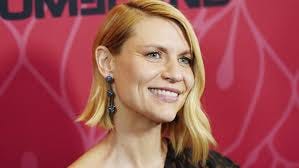
A friend said she knew Claire Danes and could introduce me. I once saw Claire on Broadway, moving along a crowded street and creating her own source of light. I loved her in Homeland. Everyone near a person who gives off light fades into the background. It’s a fact in the same way that ribonucleic acid jump-started life on this planet. Probably, on all planets.
I once knew a man who gave off this light. In his presence, I became quiet and stupid. It was relaxing. I felt too much admiration to care how I came off. Once, on Homeland, Claire had a scene with a hacker, who had taken control of her computer and was extorting thousands of dollars she didn’t have, plus he was making her strip. Claire is the kind of women who will hunt down a hacker. She beat the shit out of him and broke his equipment. She pulled out all the wires from their sockets, until his life was a pile of sizzling spaghetti.
If I meet Claire, as soon as I will see her beautiful beautyness, I will become an animal in the forest. Not Bambi. The groundhog we hate who lives under our deck. I will become the groundhog because there will be no choice.
I’m not as jealous of other people as I used to be. Some people wake up to find they are missing the eye color they had when they went to sleep. It’s like that with me and jealousy.
The reason I’m not as jealous is I don’t know. Maybe it’s Richard and believing we are going to tumble along together until one of us drops. Maybe it’s the practice of loving the things there are to love, like Claire Danes.
It might not be true I’m not as jealous as I used to be. For example, I have a fancy event coming up in a few months, and it crossed my mind I could run into a former friend who was probably always an-enemy-in-training, and I found myself rehearsing things I would want to say to her that would come off like the inexplicable bitterness of a sad lunatic. So, there is that.
The other day, I met the friend who knows Claire at a pretentious place in Hudson, and she bought herself a lunch. I had tea. She said, “You don’t eat?” I said, “I don’t eat.” She said, “Why?” I said, “I’m old, and I pointed to my body.” She waved me away, and I could see that being of two different minds was not going to come between us. After that exchange, I couldn’t very well ask for a taste of her sandwich. It looked great, with gooey cheese and Parma ham on a ciabatta roll. I liked watching her face as she told me about her life and that she had recently decided to work less. She said, “I will have to think all the time: What do I want to do? instead of: What do I have to do?” I said, “I can absolutely recommend this way of life.”
I’m hoping it takes a long time for me to meet Claire. I want to extend the period of anticipated awe. Also, I have nothing to wear. I have nothing to wear to the fancy event, either. Several friends are working on a possible ensemble. One friend has sent a list I read with interest, concerned it might include a flowing robe. Not the kind worn by Nicole Kidman in the movies she’s made lately, where she plays some kind of warped guru. It’s not a bad casting choice for her. Her extreme thinness is disorienting to about the same degree as my absence of thinness is disorienting to me. When I mentioned wearing false eyelashes to a friend, I had to promise her I had not entered my Louise Nevelson stage. This, too, might not be true.
I have been thinking of ways to praise Claire’s performances in shows that, shall we say, are not my plate of lo mein, and I gotta say the lo mein scene in Fleishman is in Trouble is, no contest, the finest moment in the series. Claire plays Rachel, who wears phenomenal clothes I would so kill for if I could fit into any of them and wear to the fancy event. Rachel, it turns out—spoiler alert!—is the character who is in trouble, and we see this one night when she keeps ordering beef lo mein from a Chinese take out. Order after order arrives. She opens the container, takes one bite, and spits it into the kitchen sink.
In this scene, Claire becomes Carrie again from Homeland, and I started to get hungry for beef lo mein. The other thing in the show I liked is when Rachel’s dick boyfriend gets bored with her at a spa they have gone to and decides to leave, and then Claire buries her phone in the ground. She looks so hot in that t-shirt because she’s Carrie again, going to the place where out of disappointed romance you bury your phone in the back garden, and then you walk, and walk, and you walk.
Earlier in her life, my friend had been an Olympic diver. She still swims a mile every day—hence her ability to eat a sandwich. I remember back when I swam a mile a day. Even then, I needed friends to point me to the right shops for clothes. These friends happen to be the same ones I am consulting now. After a swim, I would sit in the sauna, checking out the bodies of the other women. It was like observing the time-line that shows how fish grew legs, walked out of the sea, developed other limbs, and gradually stood upright.
In the sauna, women would get to talking. After a while, everyone looked beautiful. That’s where my friend met Claire. If you met Claire in a sauna, would you pretend not to know who she was? Even in the hot mist, wouldn’t you be blinded by the light?
________________________________________
Support, please.
I seriously need you to jump in. A paid subscription right now costs less than a book. You should still buy books. I’m just offering a comparison.
What you get:
Access to the complete archive of 280 pieces.
A free 15-minute consultation about your writing.
Monthly Zoom conversations with guest artists as well as recordings of the events. So far Richard and I have hosted Steven Dunn, Margo Jefferson, Elizabeth Kendall, Emer Martin, Perry Yung, Francine Prose, Sophie Haigney (of The Paris Review), and David Cale. Our next artist is brilliant poet David Daniel on Saturday December 20 from 3 to 4 EST. To RSVP to David’s gig, please email me at: lauriestone@substack.com.
You can chip in for any period of time you like. With paid support, you’re saying you value this publication and recognize it as a professional endeavor. There is no paywall, and there will never be a paywall. I also don’t write for free.
____________________________________
Streaming Now
The Americans

We finished rewatching all six season of The Americans the other night. These are notes from inside the stupor of withdrawal.
I find myself thinking, mostly, about a trio of male characters: Stan (Noah Emmerich), the FBI agent, Philip (Matthew Rhys), the KGB sleeper spy, and Oleg (Costa Ronin), the KGB operative situated (at first) in the Russian embassy in Washington DC. They are all variations of the same man, who has been shaped by a political ideology he has come to suspect, even as he is carrying out its orders, until he arrives at point where he can no longer act against his own knowledge. Each of these men is a tragic figure, because they operate in doubt from the start and are unable to resist the pressures around them. Also, the cost of resistance is likely death or life imprisonment. They aren’t cowardly. They are stuck, and their stuck condition is their tragic condition.
The performance of Philip by Matthew Rhys is a masterpiece because he acts throughout on the basis of his love for Elizabeth (Keri Russell). He’s smitten and loyal, and he moves inside his commitment to her and his undying attraction to her. Love is love. It will carve a life for you, if you are this kind of person. When he arrives in the US, twenty years before the finale of the show, he is already disillusioned by the rhetoric of patriotism.
There are no female characters with the depth of inner life and capacity for change that’s been given to this trio of male characters. The Americans is the genius creation of Joe Weisberg, a former CIA officer, who developed the concept and served as showrunner with Joel Fields. I’m saying this is a show created by men, who are interested in the inner lives of men because they have inner lives to draw on for their characters. I’m saying men are interested in men, and for that fuck them, not because they should, as artists, be interested in something else, but because the rest of the world gives men the space to explore their interests—and mistakes their interests for people.
Back to the show. The villains, and there are many, are all ideologues, who, even when doubt creeps along their edges, burning out their minds like film caught in a projector, even when they know what they believe is murderous and pointless, these people continue with their projects and sacrifice anyone in their way. Because the show knows this and says this about all ideologies, it itself acquires a heroic gleam.
The villains are, chiefly, Elizabeth, who is married to Philip and living with him undercover as a suburban wife working in a travel agency. Also Gabriel (Frank Langella), a KGB runner of spies in the US, and his female counterpart Claudia (Margo Martindale), delivering orders from “the Center.” Father Tim (Kelly AuCoin) is an auxillary villain in his smug and unquestioning faith in his Christian crusade.
Among the villains, we spend the most time with Elizabeth, and we are shown through flashbacks and memories of her early years in Russia how she clasped the role of KGB operative as a thrilling life preserver. Even though we might come to factor in the nothing of her existence before becoming a spy, we come to loathe her, not only for her ability to kill and lie so remorselessly, but because—in order to convince herself her life has not been a vile waste—she inducts her daughter Paige (Holly Taylor) into the same pursuit.
Paige will do anything to spend more time with her ghost-mother, and so she bends toward her, lovingly learning to smash other people to smithereens with her mother’s coaching, until, at the end, she defects and choses to go life alone. In a flashback to Elizabeth’s start as an agent in Russia, as a seventeen-year-old or thereabouts, her handler tells her the Center does not want agents to lose who they are when they travel. Russell’s face is blank, and we’re shown that inside this person there is no self to maintain, apart from her ideology.
The rest of the characters are mostly victims or soon-to-be-corpses. We feel for them, but their role is to be used horribly by the people they trust. They are, memorably, baleful and lovelorn Martha (Alison Wright), Nina (Annet Mahendru), the lover both of Stan and Oleg, and Kimmie (played by the glorious Julia Garner as a kid).
About mid-way through the series, the character of William enters, played by Dylan Baker. William is another sleeper spy, working in a US lab that produces chemical weapons—supposedly to develop antidotes to Russian chemical weapons. His mission is to steal deadly microbes for shipment back to the homeland. It doesn’t end well for William, as you might image, and at first you think: What is Dylan Baker doing in this show? His acting style is from another planet. He can’t deliver a line without a snide and comic recognition of life’s stupidity—a bitter pill coated with secret longing. All of this is conveyed in every line reading!
He makes the performance work, and the show becomes weirder and more off the rails as the plots tangle, and the whole contraption flies into space like a jittery Soviet rocket. Except for Gorbachev. Thanks to Oleg, and Philip, and Stan, and even eventually Elizabeth, perestroika gets a shot, and we are spared what’s going to happen next in Russia and what’s going to happen next here.
________________________________________
Notes on an English boyhood.
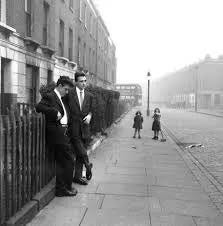
“Contact Sport” is one of my favorite pieces written by Richard Toon. It’s beautiful and literary in form. It also contains a journalistic component, in leading the reader to a county seldom heard from. That is, the sense of a male human looking back at his life to see how he engaged with the brutalities built into boyhood.
There are brutalities built into girlhood, too, and for some girls, there’s as much physical violence and threat as looms over the lives of the boys here. For me, this piece offers a window into the persistence for males of having to situate themselves in one potentially violent encounter or another—as a way of ordinary life.
I find so interesting as well the way Richard’s narrator doesn’t run away from the dangerous types he meets nor become one of them but cagily becomes their comrade, with his own sense of wariness. That is also what women often find themselves doing to move in one piece through time and space. I love the man he became, and I love the writer that man is. This is a gorgeous piece and one not to be missed.
Here are two excerpts:
Johnny was the most talented athlete at Humphrey Perkins School. We were on the same teams for soccer and rugby in winter, cricket and athletics in summer, and basketball all year round. He had the well-developed muscles of a man, not, like me, the physique a thin, fifteen-year-old boy. He had the look of a Greek statue. The girls all eyed him, but he didn’t date anyone while we were school friends. Other people, even girls, hardly registered on him.
. . . .
I didn’t question Johnny’s cruelty. I saw it as a given force of nature. I would have avoided him, if I could have, and my friendship, for that reason, felt to me a bit fake. I vied with him openly only in displays of wit, winning his confidence, in part, with fast putdowns of people he despised, i.e. everyone who appeared smarter than him. Telling jokes about the teachers and talking out of turn earned me as many detentions as Johnny got. We bonded as kings of sport and fellow rebels, although I felt his cruel streak was a sleeping animal that, once aroused, could strike. I had been raised in a family where physical violence was never threatened. My family did not approve of even raising your voice. Back then, Johnny’s freedom to lose control fascinated me as much as it repulsed me.
richardtoon1.substack.com/p/contact-sport
Notes on an American girlhood.
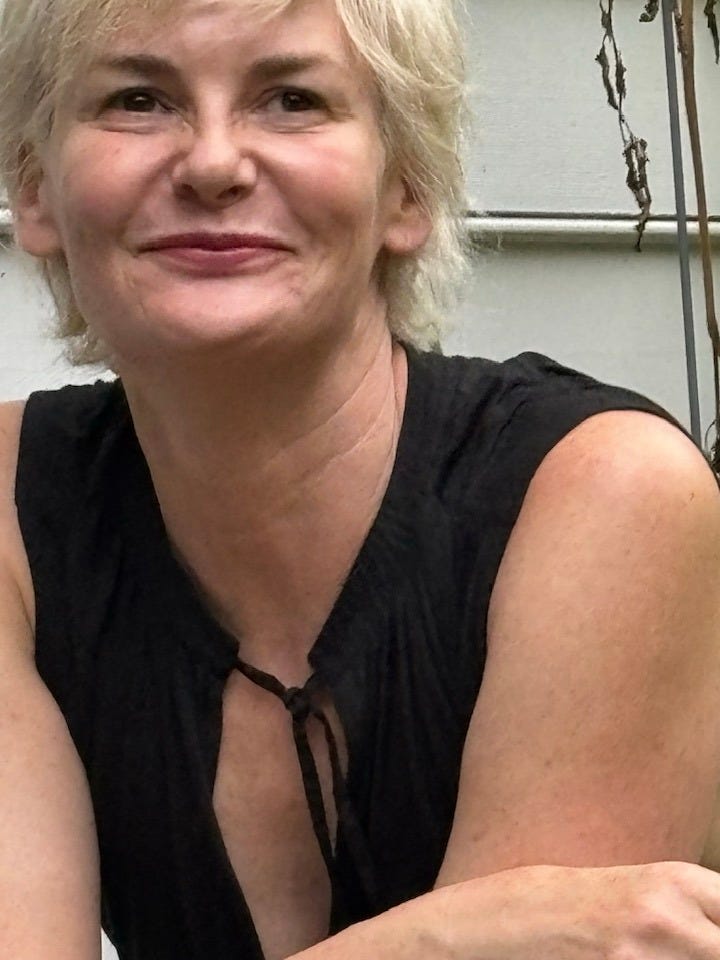
With the deepest pleasure, the stack celebrates “Balthazar,” the first publication by Heather Bursch, our friend and fellow workshop homegirl.
Below is the first paragraph of a brilliant piece by Heather, is making her debut in The Paris Review ! Remember when you used to eat the cheese puffs held out to you on the same silver platter you are now using to carry drinks? Of course you do. Welcome to life on the best possible edge.
It was lunchtime at the restaurant. Sunlight streamed through the blinds, cutting the halogens from the side so you could see everyone’s lines and shadows and they could see yours. It was loud, and the air between me and the customers was caffeinated. Lunches were always rush, rush, rush. They gave us twice as many tables as they did at dinner, and I was usually behind on orders, showing up at the table pale and sweaty. At dinner, there was the wine haze. The lights were dimmer, and you could duck in and out of view. Dinner meant grappa and lingering and more time to charm the customers. At lunch, we turned our tables fast—it was the fall of 1997, and the crowds kept coming. I was twenty-six, with a bunch of other lives behind me—or beside me, or in front of me. Balthazar had just opened that April. I lied on my resume and I had the look.
https://www.theparisreview.org/.../12/11/balthazar-1997/
____________________________________________
Happenings for paid subscribers
Upcoming Zoom Conversations with guest artists include: BRILLIANT poet David Daniel (December 20 from 3 to 4 EST) and composer and writer Errollyn Wallen (January 17 2026 from 3 to 4 EST). To RSVP to these events, please email me at: lauriestone@substack.com.
David is brilliant on the way language twists your mind into shapes it has lusted after without knowing it. Your mind is already an image factory. How to pick up the right stones for your pockets? He will tell you. I learn more about writing from reading poets such as David than I do from reading other writers of prose.
To attend one event or receive one recording, with no future payment obligation, you can buy a “coffee” for $4 at ko-fi.com/lauriestone
Breakout sessions following the Zooms with guest artists
The BREAKOUT SESSION following the Zoom with David Daniel is on Sunday, December 21 from 3 to 4 EST. To sign up please email me at: lauriestone@substack.com. There is a cap of 10 at each breakout. You are invited to share a piece of your own writing under 400 words, and the fee is $30.
To request recordings of past Zoom Conversations
with Steven Dunn, with Margo Jefferson and Elizabeth Kendall, with Emer Martin, with Perry Yung, with Francine Prose, with Sophie Haigney (of The Paris Review), and with David Cale that includes a reading from his hit solo theater piece Blue Cowboy, please email me at: lauriestone@substack.com
Working together one to one on your writing or starting and growing a Substack publication.
If you would like to book time to talk one-on-one about a project you are working on or for guidance in gaining confidence and freedom in your writing, please email me at: lauriestone@substack.com.
If you would like to book time to talk one-on-one about STARTING AND GROWING a Substack publication please email me at: lauriestone@substack.com. I can help you through the software, choosing a title, art design, and approaches to gaining readers.
I love this post so much. In an absolutely charming but very sharp way it performs the way women refract our experiences of ourselves through abject admiration for the luminousness of other women. Keri Russell is one of these women, and Claire Danes is clearly another. I've been watching her in The Beast in Me, more or less mesmerized by the way she turns the light on and off, sometimes with her smile, and sometimes with her eyes, and sometimes just with her walk. Also, very happy to see she's simply letting her face be her face and not trying to iron it out or inflate it or hem it. Another one: Toni Collette. I'll watch anything she does and she can do anything. I've loved her since she was Muriel. When she was filming The Sixth Sense in Philadelphia, I was teaching at Penn, and I would take hot yoga classes in the evening, five days a week. While she was filming, so did she. She would come into the dim, hundred degree room quietly, roll out her mat, and do her 90 minutes of Bikram like a boss. I never spoke to her because I didn't want her to feel invaded, but also was a chicken.
I met Louise Nevelson. She was a dear friend with Eva Glimcher, Arne’s mother/co-founder of Pace Gallery, which had a presence here in Columbus. Ms. Nevelson’s lashes were also sculptures, thick, black buttresses for her vision.