
Circus
Spark of life.

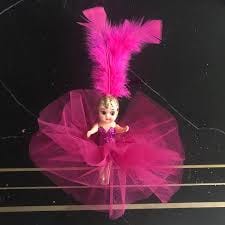
I’m four or five. My mother takes me to the circus. She will do this year after year, and I love it. I absolutely love everything about it, and during the show, this is at Madison Square Garden, the old one, and it’s the Ringling Brothers circus, and during the show, vendors walk up and down the aisles with a shelf of items to sell attached by a strap around their necks or maybe a kind of harness. They sell glittery dolls with feathers on sticks, and flashlights, and every kind of junk food chazerei you can imagine, hot dogs and pretzels, and Toby opens her purse with a crisp unsnaps, she opens her purse and buys me whatever I want.
Both my parents buy their kids things. They don’t hold back. They didn’t come from this kind of world. They don’t think children should have to work, either, no jobs around the house. Not one ever. They say, “You didn’t ask to be born.” I’m sure I did ask to be born, but whatever.
I am so happy at the circus. I am very easy to please. Back then and still. It makes my mother happy she can please me. I think this is key to the story, now that I think about it, right this moment. I think it’s key because often my mother will say to me, “You are insatiable.” And, “I can never figure out how to please you.” As I said, actually, I think I’m easy to please, then as now, so my mother is probably referring to something more mysterious between us. I think she’s saying, “I can’t see inside you. You are not like me. I can’t use myself to understand you, as opposed to Ellen, who is me.” My sister is not Toby, in fact. My sister will spend her whole life sorting this out, but leave that aside.
I’m four or so, and Toby and I are leaving the circus. The traffic is acting exactly like the sky, and ahead of us I see a mother yank one of those sparkly dolls on a stick out of the hands of her little girl and throw it in the trash. The child cries, and then I start to cry. My mother looks at me in horror, or some kind of unease that looks like horror, or I remember as horror, her brows knitting with those apostrophes in the middle. My mother, who has bought me everything at the circus, including a wandy doll of my own, my mother who so wants me to me happy and now sees my tears says, “What’s it your business? It’s not happening to you.”
So here’s the thing. Did she really say this in the warm New York 4 o’clock light? I think she must have said something to that effect, and as I said, pleasing me, I think, was a deal for her I had no idea about as a kid. I don’t think I understood this story this way until five minutes ago, at age nearly 80. I thought her line showed she didn’t understand empathy.
Here’s another thing, this feeling I’m aware of stirring through me lately is to question almost every memory I’ve preserved. I want to turn them all over. It’s like living your life again with a different screenplay, and a different director, and different lighting but with the same actors. “What if it didn’t happen that way?” I feel a thrilling impulse to ask myself more and more. I’m not that interested in why I’ve held onto a memory in a certain way in the past and now don’t need to see it as stable or as a document of anything real. The thing I want to tell you, mostly, is the thrill of this impulse to revise my understandings, let them flow out, wash along a stream. What stream? Where is it going? It doesn’t matter.
_______________________________________
Another heart of change
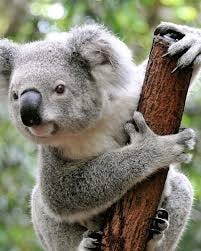
Today, I am forced to revise my position against the fact tidbits Richard hears on BBC radio and delivers with the morning tea. He reminded me that early hominids, the ones who would evolve into homo sapiens, had opposing digits on their feet as well as on their hands. He had been listening to a report on koalas, which everyone knows have two opposing thumbs per front paw, when the fact about hominid feet was mentioned. Koalas need opposing thumbs to help them climb and to sort out which eucalyptus leaves are edible and which ones are poisonous. You can see how this piece of natural selection was going to work out.
Back to opposable big toes. As soon as Richard introduced this image, it was impossible not to imagine us drinking tea with our feet, if only we’d been able to retain opposable big toes as well as opposable thumbs. Richard said, “Sometimes evolution decides on a trade off, you get the hands but you can’t keep the feet.” I said, “I wonder if shoe manufacture had anything to do with this.” He said, “Probably.” I said, “Today’s fact was useful. I will try to be kinder to you when you tell me things I couldn’t possibly care about.” He said, “That wold be a huge advance in the evolution of our relationship.”
________________________________________
More change
When I was young, there was no language for all the ways men felt safe. When I was nineteen, I met Kate Millett, and a bunch of us invented words. It would seem that things that exist would come installed with words to describe them, and anyone who believes this I have a bridge to sell you that extends over the river to Brooklyn. This bridge is quite beautiful, and I can sell it to you cheap.
Men used to tell me things will never change. Never. You are a joke, your politics. They aren’t even politics. It’s you being hostile and aggressive. You think Chomsky and his giant flock of bros didn’t think this? They said it. I met every Marxist hued man on the left, every single one, and they were convinced we were nothing and they would always be safe—and who can blame them for believing that?
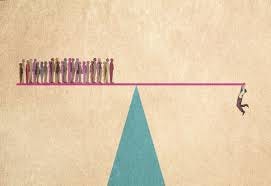
I said we are going to change the world. They said you can’t. It’s impossible. You want to know how I know the world can be changed? Well, one thing is no one reading this is confused by a word I am saying. Every man in the Epstein Epstein thought no one has more power than me to stop me. They were right. Obviously.
We don’t have more power than them, and we didn’t stop them, and now they feel unsafe, just a little, because they are not as safe as they once were. The more you feel the freedom not to please them with your words and the way you position your body when you stand in front of them, the less safe they become. It’s math.
______________________________________
Stackland
A friend of mine, a well-published novelist, a man with great advances and reviews, recently stepped into Stackland because he felt like it. He wanted to write the way he wanted to write, no trimming to meet editors’ expectations or publishers’ ideas about marketing. He just wanted a direct means to feel good about what he put out to readers, and a number of friends told him not to do it, not to put his fiction there because then no one else would want to publish it, and maybe what they were saying under this reservation is, anyone who writes on Substack is an amateur, not very good. If they were good, why would they need that means.
My friend said fuck that and was immediately happy. If you are worried about doing what my friend has done and what I have been doing for three and a half years, if you are worried no one will take you seriously because you believe there is another literary world out there that is a gigantic version of The New Yorker, if you think this is true and are waiting to be invited to that party, zei gezunt. Off you go. Live and be well.
Let me tell you, this is one of the best publishing experiences I’ve ever had and rather than be scorned for doing it, I’ve had more offers to publish elsewhere than I would have had without Substack. The world of literary publishing is changing. We’ll be talking about this with Daisy Alioto, founder of DIRT.fyi at our next Zoom with guest artists—this Saturday, FEBRUARY 28 (from 3 to 4 EST, RSVP: lauriestone@substack.com)
Do you want to know the best part? You can create a voice that doesn’t sound like anyone else because what’s the point of writing if you don’t. You can create this voice with so much pleasure and ease. The pleasure and ease of writing is its joy. It’s also the joy of existence.
As much as I love writing here, this is a publication for sale. Paid subscribers are the only means of the stack’s support. I don’t have a paywall. I will never stop you reading a post. If you enjoy what you read and have not yet taken a turn—it costs very little to jump in—please consider joining today. And please make sure to use a browser on your phone or computer, and not the Substack app.
_____________________________________
Streaming now: The Pitt (HBO)
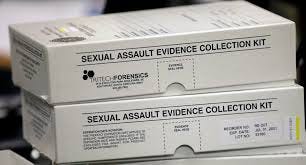
In the most recent episode of The Pitt, a woman enters the ER seeking care following a sexual assault. The head nurse has been trained in a protocol, both medical and forensic, to speak to women in such situations and explain the steps of interviews and physical exams used to collect evidence. The show devotes a lot of time to the case, showing all the steps involved and all the people who talk to the woman.
It’s a dead sequence. It comes off like a sex ed video or a public service documentary. It comes off as if the show is saying to viewers, look how aware we are of what women go through, and look how carefully we are informing you about a hospital visit like this, where, if a woman is lucky, she’ll be told by a head nurse, “You’re in a safe place.”
Why would any woman take this on face value, such a clichéd phrase out of the handbook of code language? The woman was assaulted by a man she knows at a 4th of July gathering—this much we learn about her and not much more. She isn’t a character. She stands for “rape victim.” And in this sense she’s instrumental to the show wanting to make a positive impression on the viewer. We feel this immediately. And with all signaling that’s well intentioned, the focus is on the party that thinks well of its project and not on the people, as human beings, the do-gooder aims to help.
We don’t feel emotion from a set of instructions and procedures. We’re distanced rather than drawn in. The writers of this episode, Kirsten Pierre-Geyfman and showrunner R. Scott Gemmill, have failed to imagine what it would be like to have been raped and to create a character, not a collection of generic data points. Just as with the Epstein revelations, people massively prefer to focus on the bad men and avoid imagining the feeling states of the girls and women on the receiving end. Much of it is surprising and doesn’t always square with popular assumptions du jour.
The episode represents a failure of imagination and creativity, a failure to see a woman who has been raped as anything more than “the woman who has been raped.”
________________________________________
Happenings for paid subscribers
UPCOMING GUEST ARTISTS on ZOOM, always on Saturdays from 3 to 4 EST:
DAISY ALIOTO founder of Dirt, the media empire, on FEBRUARY 28. To RSVP: lauriestone@substack.com
I met Daisy eight years ago at a meeting of The National Writers Union. I had helped start the organization in 1981. Daisy and others were rebooting it to help freelance writers navigate the changing world of publishing. We instantly became friends and have been in each other’s lives ever since. Her brainchild Dirt includes a publication called Blank, devoted to literary writing and the way it shares housing with digital technology and technology of all sorts. Richard and I are so looking forward to speaking with Daisy and hearing what you all want to ask her about her own writing and the way she is shaping a career big time as a publisher and editor
.MICHAEL KLEIN, poet, on March 28.
MARGA GOMEZ, actor, standup, and writer, April 25.
To RSVP to these events, please email me at: lauriestone@substack.com.
To attend one event or receive one recording, with no future payment obligation, you can buy a “coffee” for $4 at ko-fi.com/lauriestone
Breakout sessions following the Zooms with guest artists
The BREAKOUT SESSION following Daisy’s Zoom is on SUNDAY, MARCH 1 from 3 to 4:15 EST. There is a cap of 10 at each breakout. You are invited to share a piece of your own writing around 400 words. The fee is $30. To sign up please email me at: lauriestone@substack.com.
To request recordings of past Zoom Conversations
with Steven Dunn, with Margo Jefferson and Elizabeth Kendall, with Emer Martin, with Perry Yung, with Francine Prose, with Sophie Haigney (of The Paris Review), with David Cale that includes a reading from his hit solo theater piece Blue Cowboy, and with poet David Daniel, please email me at: lauriestone@substack.com
Working together one to one on your writing or starting and growing a Substack publication.
If you would like to book time to talk one-on-one about a project you are working on or for guidance in gaining confidence and freedom in your writing practice, please email me at: lauriestone@substack.com.
If you would like to book time to talk one-on-one about STARTING AND GROWING a Substack publication, please email me at: lauriestone@substack.com. I can help you through the software, choosing a title, art design, and ways to gain readers.
__________________________________
Please “comment,” ”like,” and “share” below. Your engagement helps the algorithm notice the stack and gain a presence here for feminism and literary writing.
I'm pondering your take on the Pitt episode. This is why I like to read you. I feel I am often stuck in a place without knowing it. And then I read or hear someone else's view and my mind expands a bit. I didn't have the thought you had while watching it. My main thought when the nurse said "you are in a safe place" was: No, she is not, don't tell her that. I heard the victim's conflicting views of her rapist and I wondered how she got herself to the ER when she was so conflicted. I thought it did a good job of showing how women can have a terrible time naming the thing that happened to them for what it is. She didn't want to harm the man who did this to her. She wanted to, perhaps, excuse him. She wanted to get out of the ER as quickly as possible and perhaps put all of this behind her. She worried about ruining someone else's life. I understood this point of view, as harmful as it is. She seemed petrified, freaked out. I saw the way women have been programmed. I could feel her programmed response. So I didn't see her as just "rape victim." But I like thinking about your take. Also--everything you wrote here about memory is a yes. The past is over. We make of it what we will, depending on who we are right now.
The diversity of this post is great. I like the memory of glittery dolls with feathers on sticks and your remaking of memory. I'm all for changing the past and thereby making a better present.