
Beat the clock
As soon as a robot knows it's a robot, it is no longer a robot.

In 1990, on the day Gardner would die, a woman named Evelyn poked her head into his room at the hospital, patted his cadaverous shoulder, and said to me, “Let’s go get coffee.” Gardner was dying of bone marrow cancer and was unconscious. His nurse said go. He was stable. His pulse would either race or get very slow before he died.
Evelyn and I went to a cafe across the street and sat at a formica table. We had once been friends. Maybe we had never been friends. She had come to give me courage—not for Gardner’s death but for life without him. She said I had a chance, now, to loosen my grip on men, and I held onto the balloon of her as it rose over my life. I held onto the balloon of her, feeling the future rushing in, a tunnel of cold air with voices saying loneliness and loss were an adventure. A waiter kept refilling my cup until I saw on a clock that an hour had passed. I rushed back to Gardner, but he was already dead.
What was the allure of Evelyn? She was a magnet whose pull I can no longer feel. That kind of romance is how I know I was once young, and I want to tell you the pleasure of not missing it.
Ten years before, she had come to stay with me and Gardner in East Hampton, and she had gotten into an argument with friends at dinner. To change the mood, a bunch of us piled into Gardner’s station wagon and drove to the ocean. A full moon cast shadows. Evelyn continued to argue. The dog kicked up sand.
When we got back to the house and people were heading for their cars, I realized the dog wasn’t with us. How was this possible? I went everywhere with Sasha. I was the dog. Gardner and I jumped back in the car and raced to the beach. I was terrified something had happened to him or that he’d trotted away and would be lost forever.
He was in the parking lot, pacing back and forth in the place where he’d last smelled us, his eyes glowing in the headlight glare. He had a black terrier face, a white body, a plumy tail, and the tapered, elegant legs of a goat. He dived at us when he saw us and said to me, cocking his head, What was that? I said, “I love you, I’m so sorry, it will never happen again, I love you so,” and it was true. I loved the dog, and I loved Gardner. I said, “I can’t believe I did that,” but it was a lie, because I knew what I was, and I will never forgive myself for missing Gardner’s death.
________________________________________
Things I love about 2001, a Space Odyssey
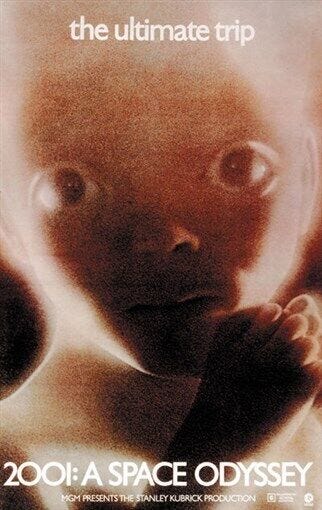
I love the languid pace. I love the way the camera is spellbound by beauty and has to keep looking. The beauty of humans dressed in apey suits, baring their weird, gummy teeth. The zillions of pinpoint stars outside the windows of the space craft. The dashboard lights reflecting on the face of Keir Dullea, who plays the astronaut Dave, a man roused to wrest control of his life from the computer who has decided to kill him. I love all the questions that go unanswered. Did HAL “decide” to be murderous on his own, or is murderousness—as the early ape sequence dramatizes—so much the lynchpin of humanness that humans could not help but unwittingly program an artificial mind as an extension of a human mind? I love that we know nothing about the beings who planted the monoliths and jumpstarted the evolutionary leap to brain-hand use, and in the mind of Stanley Kubrick to the use of weaponry. I love the music. It’s so clever, and also just fucking gorgeous. The Ligeti! The way Also Sprach begins and ends the film. The duel between Dave and HAL. Finally a relationship!! The crazy, Louis XVI interior design of the room where Dave is installed on Jupiter or inside the mind of who knows what.
By the way, I don’t think murderousness is the lynchpin of humanness. I think it’s language, our greatest tool, and communication. Those apey creatures are easy prey for larger, flesh-eating predators—as shown in the movie when a tiger attacks one of the troupe. In order for the small bands of protohumans to create enough disturbance to scare off larger predators at the site of a kill—where they can get meat and therefore protein and develop the larger brains that will include a frontal cortex—they would have needed to cooperate and band together. But this is my movie, not Stanley’s.
_______________________________________
Moon shadows
The earliest tools are 2.34 million years old. One million years ago Homo erectus, traveling northward, wandered into an epochal glacial event. Five hundred thousand years ago Homo sapiens and Homo neanderthalensis shared a common ancestor. Homo sapiens have existed for 150,000 years (the origin of mitochondrial Eve). Modern humans came into existence 60,000 years ago (the origin of Y-chromosome Adam). Fifty thousand years ago, a population of 5,000 modern humans moved out of East Africa and began to populate the planet, creating cave paintings as early as 35,000 years ago, some by Neanderthals, the last extant trace of which dates back 28,000 years. Ten thousand years ago the human population, numbering between five and six million, started to grow food rather than hunt for it, a transformation that allowed them to exist in every climate and increase their population to the six billion we have now. Five and half thousand years ago the wheel rolled along. In the 1960s, large numbers of people believed societies could extend happiness to entire populations. Eleven years ago, big secret money financed the thing that is happening to us now. When has anything you thought about the future turned out as you imagined it?
_______________________________________
Bone in the throat
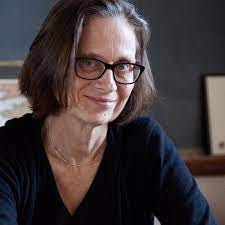
One day, years ago, Richard read aloud a story by Lydia Davis. It was about a woman who is divorced, remembering when a fish bone got caught in the throat of her then-husband. Attempts to dislodge it with bread and water fail, and they go onto the streets of Paris in search of help. They are directed to a hospital, where a doctor extracts the bone with a tiny hook. The doctor, a Jew, and the husband, also a Jew, speak in French about being Jews. I said to Richard, “Well, the story is certainly suspenseful, but I have no idea what it’s about.” He said, “Irritation and connection. Irritation is at the center of everyone’s story, irritation that can neither be coughed up or swallowed. Still, the narrator is recalling connection during a time when she’s alone. That’s the risk she takes in looking back at a happier time.” I said, “I would never have understood that story in a million years.” He said, “Yes, you would have.”
Late breaking news. I posted this narrative on social media, and a correction to my account of the story was brought to my attention from Mary G, who wrote:
Hi Laurie. The Bone is one of my favorite stories. In it, the doctor and the husband do not talk about being Jews—in French or otherwise. The fact the doctor is Jewish is only mentioned in retrospect, after the events of the story have taken place. Here is the last sentence of the story, and the only place being Jewish is mentioned: ‘“A great Jewish doctor,” says my husband, who is also Jewish.’” So the story ends with both a joke (an old Jewish joke, really), and an indication of one of the disconnects between the spouses.
I responded to Mary G:
In telling stories, a memory of reading drifts around. In my evocation of the scene with Richard, there are Jews and a doctor, and this is the imperfect way I put them together. Perhaps some time, I will reread the Davis story and tell a different story about memory and misremembering.
After I wrote this to Mary G, another memory swam back. Richard read me this story 18 years ago, and the memory that returned is that it happened during a visit we were taking to New York from Arizona. During this visit, we were staying in the apartment of a friend in the Village. One of the people who came to see us was a man who was very irritable with me for not giving him more time, for squeezing him in, he felt, as if he was in a queue to see us, which in a way he was. This man is a Jew and also a doctor of sorts, he’s a shrink, and the issue of irritation that can neither be coughed up nor swallowed stood out in relief during the time we spent with the shrink, whom I’ll call Paul. And so, and so, and so, my story of Lydia’s story, remembered over and over during the past 18 years, turned into the first version I told. By the way, the horrendous irony of Paul’s irritation is that he is the most scheduled human I have ever known, a man who keeps everyone, patients and not patients, closely assigned a time he can see them. He must have felt, well hell, the effrontery of being on the receiving end of such a system. Paul remains to this day a bone in my throat.
________________________________________
Stackland
I love writing the stack. Paid subscribers are the only way it continues. I don’t have a paywall. I will never stop you from reading a post. If you enjoy what you read and have not yet taken a turn at support—it costs very little to jump in!—please consider joining today. There are lots of benefits you can read about in the next section. And please make sure to use a browser on your phone or computer, and not the Substack app.
___________________________________
Happenings for paid subscribers
UPCOMING GUEST ARTISTS on ZOOM, always on Saturdays from 3 to 4 EST To RSVP: lauriestone@substack.com
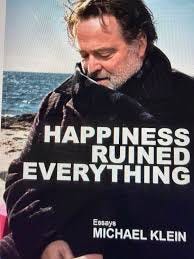
MICHAEL KLEIN, brilliant and beloved poet, prose writer, performer, and teacher on MARCH 28. His new book is Happiness Ruined Everything.
MARGA GOMEZ, utterly original actor, standup, and writer, April 25.
To RSVP to these events, please email me at: lauriestone@substack.com.
To attend one event or receive one recording, with no future payment obligation, you can buy a “coffee” for $4 at ko-fi.com/lauriestone
Breakout sessions following the Zooms with guest artists
The BREAKOUT SESSION following Michael’s Zoom is on SUNDAY, MARCH 29 from 3 to 4:15 EST. There is a cap of 10 at each breakout. You are invited to share a piece of your own writing around 400 words. The fee is $30. To sign up please email me at: lauriestone@substack.com.
To request recordings of past Zoom Conversations
with Steven Dunn, with Margo Jefferson and Elizabeth Kendall, with Emer Martin, with Perry Yung, with Francine Prose, with Sophie Haigney (of The Paris Review), with David Cale that includes a reading from his hit solo theater piece Blue Cowboy, with poet David Daniel, and with Daisy Alioto, please email me at: lauriestone@substack.com.
Here is a bit on what Daisy talked about last Saturday:
She was brilliant from start to finish, reading a short story, explaining that she reads everything her publications send out, listing elements she's engaged by. She talked about how technology is transforming the landscape of literary publishing, and she announced that Dirt.fyi is going to publish books—slow media, as she describes it. Why? Because she wants to publish books that don't fit into neat and false categories for marketing, such as "fiction," "non-fiction," "memoir," and "creative nonfiction." Anyone who has lately tried to sell a book in the book world knows the frustration of addressing yourself to "marketing" edicts.
Working together one to one on your writing or starting and growing a Substack publication.
If you would like to book time to talk one-on-one about a project you are working on or for guidance in gaining confidence and freedom in your writing practice, please email me at: lauriestone@substack.com.
If you would like to book time to talk one-on-one about STARTING AND GROWING a Substack publication, please email me at: lauriestone@substack.com. I can help you through the software, choosing a title, art design, and ways to gain readers.
__________________________________
Half baked
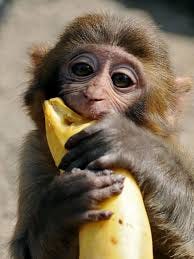
I watch those reels with three ingredients that are always bananas, or cocoa, or an egg, or two eggs, or cottage cheese, or baking powder, or frozen bananas, or dates, or honey, or yogurt. I think how great would that be to make. I do not write down the recipe. I'm not sure it's even possible to write down the recipes. I think I will be able to recreate it. I put things in a blender. There is always too much egg. Today, I made a thing I baked. We ate it. I can't show it to you because we ate it. It was neither cake nor pudding. I could see it would need a lot more time to "set," as it were, in the middle, so I turned the oven down to 300. It smelled good. We ate it because we didn't want to wait any more. Stay tuned.
It's good how these posts, which I happen to know have been rewritten several times, make me realize we can reread your writing as if it's the first time. I find that good writing can be read and reread many times because not only have you changed but so have I as your reader. I even change as I read you, which is the best trick language plays on us. That thought sticks in my mind.
A perfect read on a gloomy Friday morning, before my coffee, meditation or morning pages. I felt the jolt of coffee, stillness of meditation and discoveries unfolding as when morning pages hits a mark. Or do I mean mourning pages? When do I feel a bone in my throat? How have I convoluted my memories? Now I have much to ponder.
Thank you Laurie!